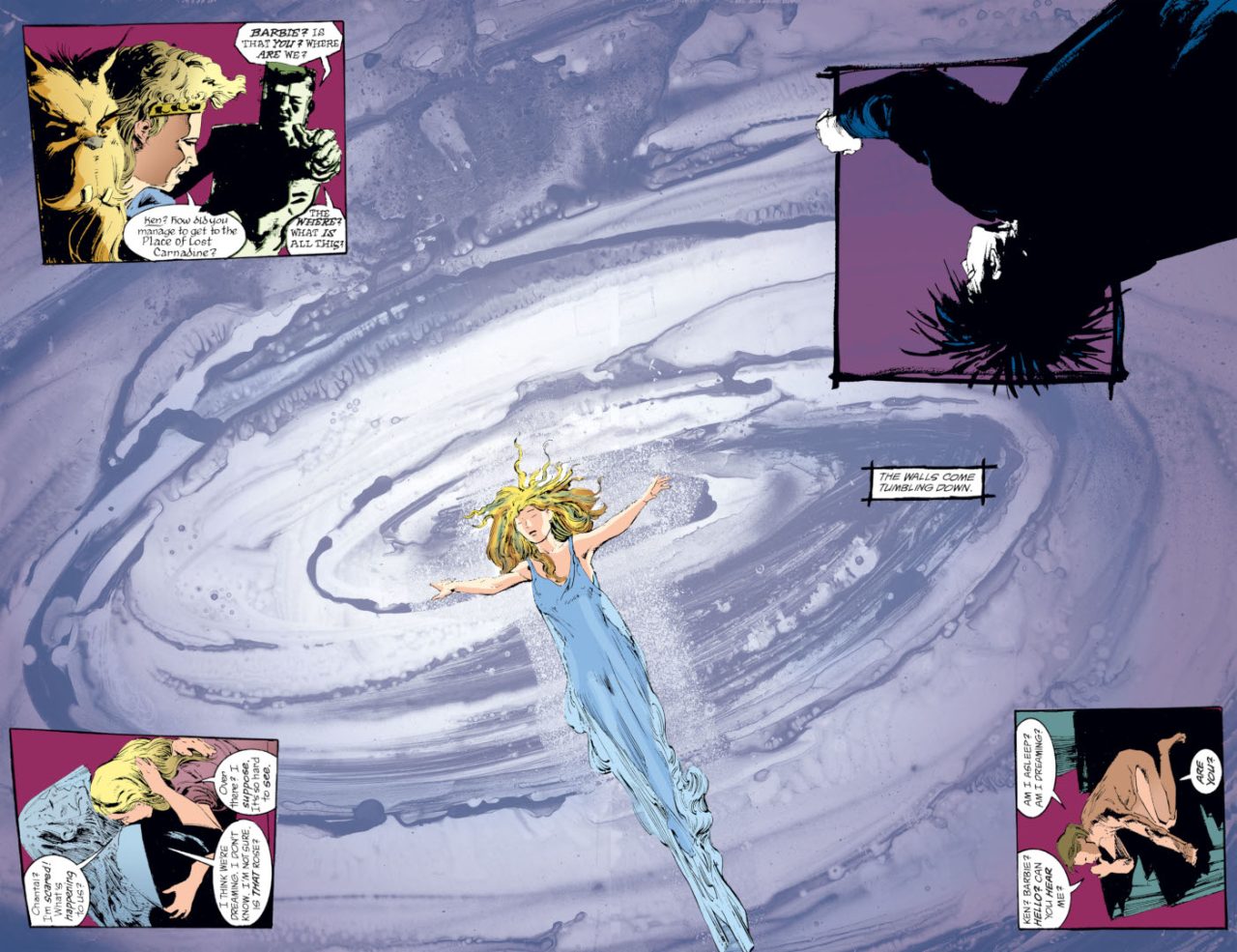
The Sandman is a pretty mediocre TV show, but what’s more interesting is that this is due in large part to it being a terrible comics adaptation. The reason The Sandman is such a good comic is that it exploits the specific possibilities of comics as a form. Because they’re specific to the form, these features of the comic cannot be directly translated to a TV show; the challenge of adaptation is to find analogous modes of expression which work with the TV form. The show is so bland because it never finds such modes of expression, and indeed it rarely tries.
I hadn’t heard of Yellowjackets until I saw people sharing the Vox post calling it “prestige Pretty Little Liars“. If by that they mean it’s not as good as Pretty Little Liars, I agree. But Pretty Little Liars is tremendous, a classic of 00s TV, a Klute for the early smartphone era, etc., so there’s lots of space to be good while not being as good as PLL. Still, I think that post also gets to something about whyYellowjackets isn’t as good. Much has been made of the way in which Yellowjackets mixes genres, but there’s one genre that dominates, to its detriment: prestige TV.
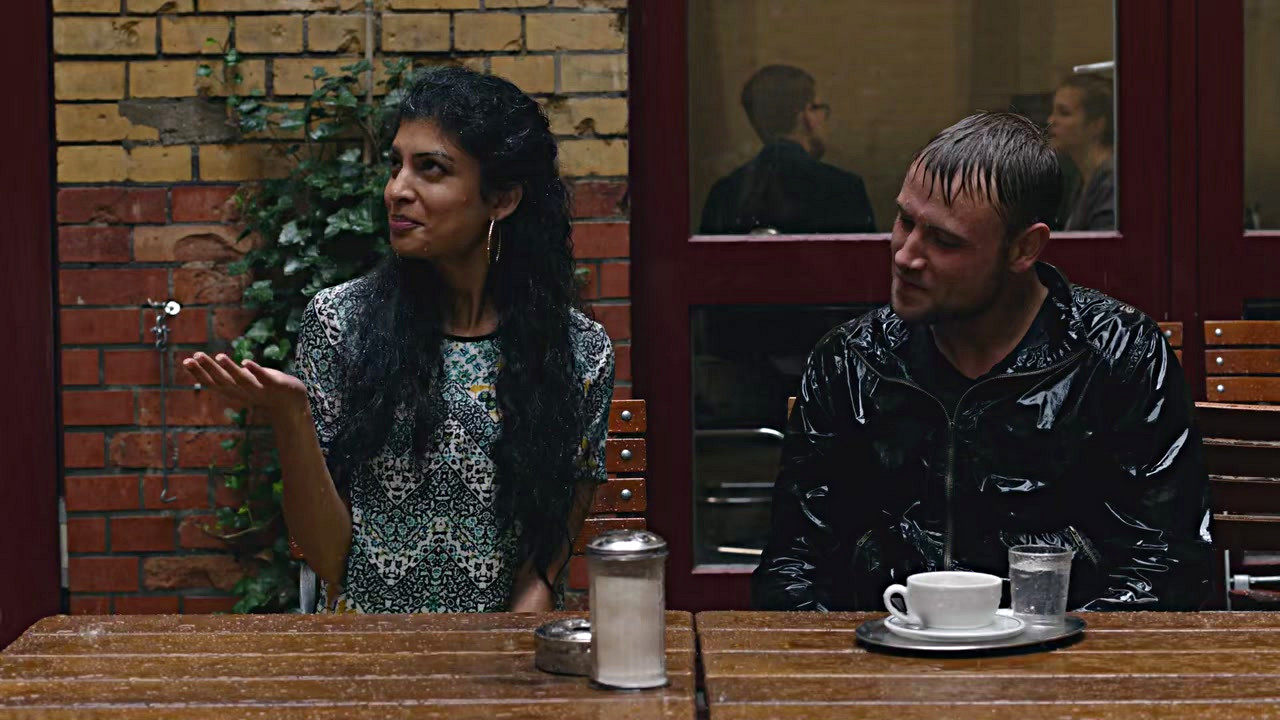
I generally find out about TV shows either through links to thinkpieces posted on Twitter, or through gifsets posted on Tumblr. I suspect the gifsets have tended to be a more reliable guide to good shows than the thinkpieces, a suspicion that was reinforced when I finally got round to watching Sense8 recently. As the gifsets promised, it’s great, but it’s great in a particular way – formally challenging, conceptually fascinating – that I’m surprised I didn’t see more thinkpieces about it. Read more↴
So, maybe I’ll continue to do this regular music post thing, but once a month? And rather than struggling to find something to say about every track I hear that I like, I’ll just write about the tracks I know I’ve got something to say about, and stuff the rest on a Spotify playlist (and my tumblr; my plan is to update them both throughout the month).
The song I’ve been most excited about this past month actually came out at the end of last year, “Back to Me” by Lauren Jauregui (from Fifth Harmony) and indie-ish electronic band Marian Hill. I love songs that are built from a number of exaggeratedly discrete components, like a bunch of machines that have been left running and have fortuitously come together to produce a song. Read more↴
I like Reign. I like how the show is early-modern Gossip Girl, flagrantly unconcerned with history except as a stage for teen jealousies and romances. I like how everyone wears pretty dresses. And I especially like the Very Serious face that Adelaide Kane, as Mary Queen of Scots, pulls whenever she has to make a Morally Difficult Decision. There’s an episode of Buffy the Vampire Slayer where Faith, the evil vampire slayer, swaps bodies with Buffy, and Faith (in Buffy’s body) practices her impression of Buffy by looking sternly into a mirror and saying, “You can’t do that, it’s wrong.” I think of this exaggerated performance of tough virtue every time I watch Reign. Read more↴
When the first episode of iZombie opens Liv Moore is a perky, successful junior doctor planning her wedding. It only takes until the title sequence, though, and she’s single and spending all her time alone, doing nothing, except for when she’s at her dead-end job in the morgue. Liv Moore is a graduate without a future (she’s also been bitten by a zombie). This closed-down, anhedonic, listlessness seems like a characteristically millennial experience – as opposed to the stereotypical rebelliousness of baby bombers, or the ironic, detached disaffection of generation X (the enforced “flexibility” which comes from Liv taking on aspects of the personalities of the murder victims whose brains she eats is another dramatization of a quintessentially millennial experience). I like the show for its portrayal of this millennial position, and more for its sympathy to it, in particular its concern to defend millennial anhedonia against the passion of edgy, soi-dissant countercultural, “cool.”
I read this stupid blog post about how millennials are apparently “uncool,” and obviously it’s hella dumb, but it did make me think that if millennials are indeed rejecting the norm of “cool,” good for them. “Coolness” has long since become a means of normalisation, commodification, and oppression, and iZombie nicely illustrates that. Read more↴